In a Fast-Warming World, Expect More Extreme Events
In fast-warming ocean areas, the Intergovernmental Panel on Climate Change has widely reported long-term changes in marine species, habitats, and ecological communities (e.g., IPCC, 2022), and stakeholder awareness is typically high regarding the potential impacts of climate change (e.g., Sumby et al., 2021). Changes in future distribution and abundance of marine species have also been projected in many regions due to warming (e.g., Cheung et al., 2014; Pethybridge et al., 2020), with implications for sustainable marine management (e.g., Pinsky et al., 2018). For example, Australia’s national agency charged with Commonwealth fisheries management is now considering the effects of long-term climate trends as part of strategic catch-setting discussions. Understanding of the impacts of extreme ocean temperature events, known as marine heatwaves (MHWs), is also increasing due to a range of national and international studies (e.g., Smale et al., 2019; Smith et al., 2021; Wernberg et al., 2025). These events, defined here as five or more days of surface temperatures warmer than the 90th percentile value for a location and time of year (Hobday et al., 2016), represent a stress test for managers and ocean users (Smith et al., 2025) because they can reveal where greater preparedness is needed.
Advances in forecasting marine heatwaves up to two to three months into the future now offer decision-makers a chance to prepare for the potential effects of these extreme events (e.g., Spillman et al., 2021; Jacox et al., 2022). If forecasts are usable and useful (Spillman et al., 2025), and combined with effective information transfer, proactive response is possible. Here we describe the delivery of seasonal ocean temperature forecast information in Australia over the 2024/25 summer and 2025 autumn, the emergence of predicted MHWs around the country and the ecosystem-wide impacts that were observed, and how preparation and adaptation can be enhanced.
Enhancing Preparedness via National Briefings
To increase awareness of climate and extreme events on Australia’s ocean and because of new forecasting capability, five national marine climate briefings were held from November 1 to May 2, 2025, following a similar format to that used the previous year (Hobday et al., 2024; FRDC, 2026). These four-part, 50-minute briefings, led by authors Hobday and Spillman, began with an educational summary covering a topic of general interest to ocean users. These topics included the role of subsurface ocean structure, importance of upwelling, the relationship between warm oceans and cyclones, and climate change attribution. The second and most substantive part of the briefings covered recent, current, and forecasted environmental conditions. Forecasts of surface and subsurface MHW category and probability (based on 99-member ensemble runs) at lead times of up to three months were presented. Forecast skill varied around the country and with lead time (Grant Smith, Bureau of Meteorology, pers. comm., March 2026). The third part addressed end-user decision-making and illustrated the different phases of decision-making (e.g., Hobday et al., 2023). The final part was a question-and-answer session, with occasional informal polls.
The 2024/25 briefings were advertised by Australia’s Fisheries Research and Development Corporation and attended by an average of 100 (range 80–150) stakeholders representing commercial, recreational, and indigenous fisheries; conservation agencies; marine tourism; and management and policy staff. This was an expanded number of sectors compared to the previous year, which was dominated by fisheries attendees. These national briefings also provided researchers around Australia with information to share with decision-makers in targeted regional marine climate briefings. Consistent with the briefing hierarchy presented by Hobday et al. (2024), complementary regional briefings took place between November 2024 and May 2025 in Western Australia, northern Australia, and southern Australia. These briefings motivated the ongoing development of regional (e.g., Champion and Coleman, 2024; Marine Resources, 2025) and industry MHW response plans (e.g., Coleman et al., 2025).
To gauge the effectiveness of national briefings, a poll was conducted following each national briefing series each year (~50% response rate). For the 2023/24 and 2024/25 briefing series, 40 of 42 and 54 of 55 respondents supported ongoing briefings, respectively (97% of respondents overall). Responses to the question “Have these briefings increased your understanding of marine warming and potential impacts?” were yes for 44 of 45 and 57 of 57 respondents for each summer (99% overall). In response to the question “Have you undertaken any of these activities in response to briefings?” 51 of 55 respondents had informed others, 11 had made plans, while 11 had taken actions. Details on these actions were not sought at the time. Finally, 36 suggestions for future briefing topics proposed by attendees included oceanographic drivers, descriptions of impacts, and response options. This feedback suggests that the national briefings have been positively received by stakeholders, and that increased knowledge and forewarning of MHWs has translated into actions to prepare for and respond to events.
Ocean Conditions Around Australia Over Summer 2024/25
As predicted in the national briefings, MHW conditions were documented throughout Australia’s oceans during 2024/25, with notably high levels of thermal stress observed off northwest and southern coastlines (Figure 1). In Western Australia (WA), moderate MHW conditions were first observed in the northwest in August 2024. By mid-September 2024, large areas were exhibiting strong MHW conditions (see Hobday et al., 2018, for MHW categorization). Temperatures cooled toward the end of October before increasing again in November, resulting in moderate to strong MHWs for the northern half of WA extending hundreds of kilometers offshore and persisting to the end of 2024 (Figure 1). In January 2025, conditions re-intensified, and severe and extreme MHWs were observed in the first half of January. By the start of February 2025, MHWs extended along the full extent of the WA coast. The second half of February saw a reduction in MHW intensity offshore in the northwest, likely because of cooling due to Tropical Cyclone (TC) Bianca, before intensifying a second time in the first half of March 2025. Strong to severe MHW conditions persisted from the end of March to the end of April 2025 from the central west coast southward (Figure 1).
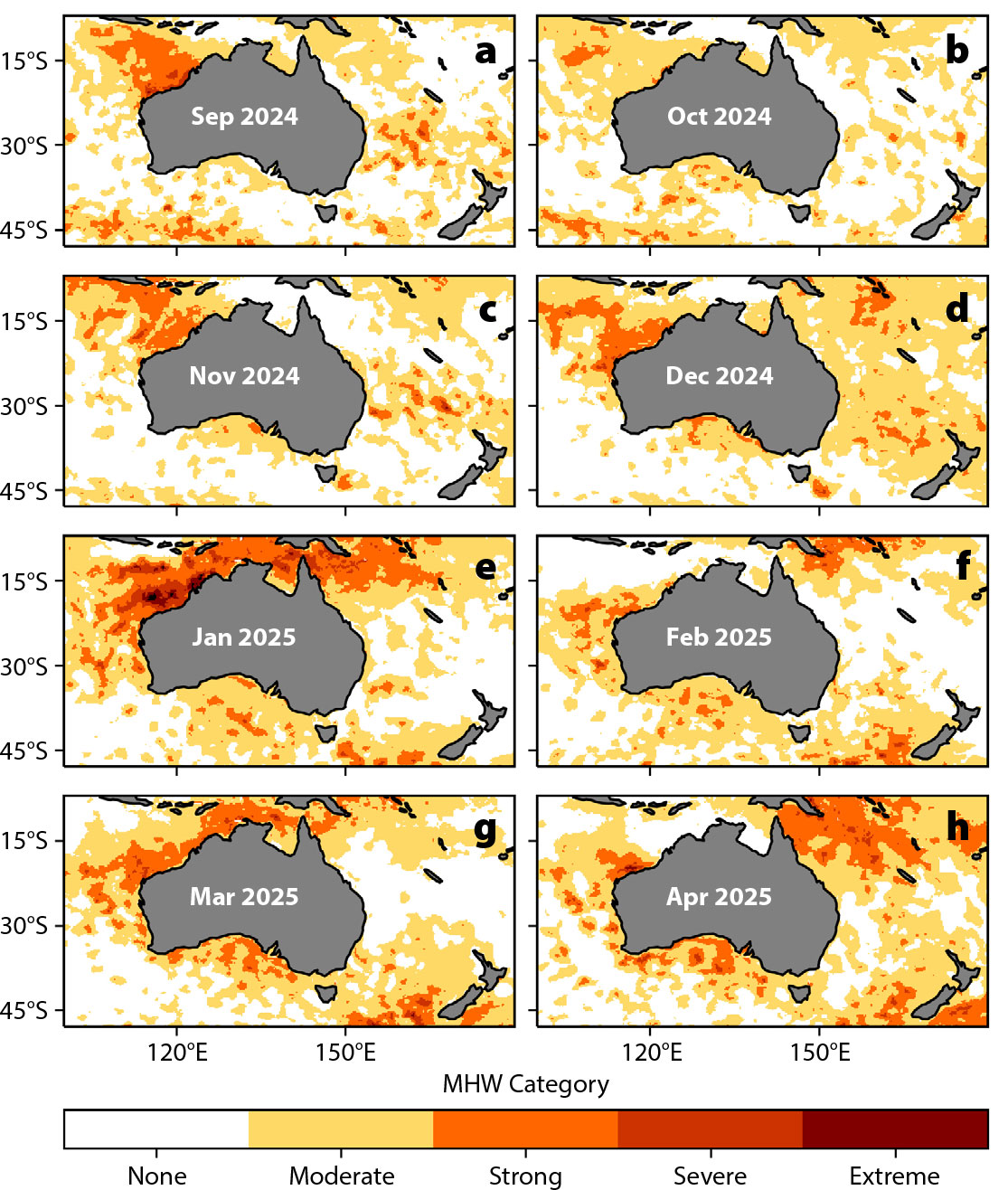
FIGURE 1. Monthly patterns of marine heatwaves around Australia between September 2024 and April 2025. Data are based on sea surface temperatures provided by the ACCESS-S2 ocean reanalysis (Wedd et al., 2022), and categories are as defined in Hobday et al. (2018).
> High res figure
|
In southern Australia, MHWs developed over late September and early October 2024 before extending east across most of the Great Australian Bight in November (Figure 1c). Strong and severe MHWs occurred in early February and late March 2025 from nearshore waters to open ocean waters in the central and eastern Great Australian Bight. By late March, MHWs had extended east to southern Victoria, Bass Strait, and Tasmania. Southeast Tasmania experienced localized MHWs in November 2024, and by March 2025, MHWs occurred around most of the state. In general, conditions were milder for Tasmania compared to the 2023/24 summer where a severe MHW persisted for the entire summer (Hobday et al., 2024).
In Queensland and the Coral Sea, sustained MHWs were not observed until December 2024, when moderate MHWs occurred in most of the Coral Sea (Figure 1). In fact, MHWs were detected across the whole east coast of Australia throughout December, including off New South Wales (NSW) and northern Victoria. In early January 2025 the MHW extent retracted north and intensified in the northern Coral Sea and the Gulf of Carpentaria. MHWs persisted in the northern Coral Sea for the first half of February before temperatures were ameliorated by the long-lived severe TC Alfred, which moved south over the Coral Sea from February 21 to March 9, 2025. MHWs again developed in March 2025, predominantly in the north Coral Sea, before extending the full length of the Great Barrier Reef in the first half of April with severe MHWs in the far north. Moderate MHWs continued through the end of April 2025 in most of the Coral Sea and over the Great Barrier Reef.
Regional Impacts Associated with Warmer Waters
A range of ecological impacts were reported by researchers, government agencies, media, and the public across the 2024/25 summer and following months. The direct attribution of impacts to MHWs was straightforward for some observed impacts, and less so for others, but we include them here pending more detailed study. Impacts were evident around Australia across marine ecosystems and on ocean-dependent industries, including fisheries, aquaculture, and tourism (Figure 2).
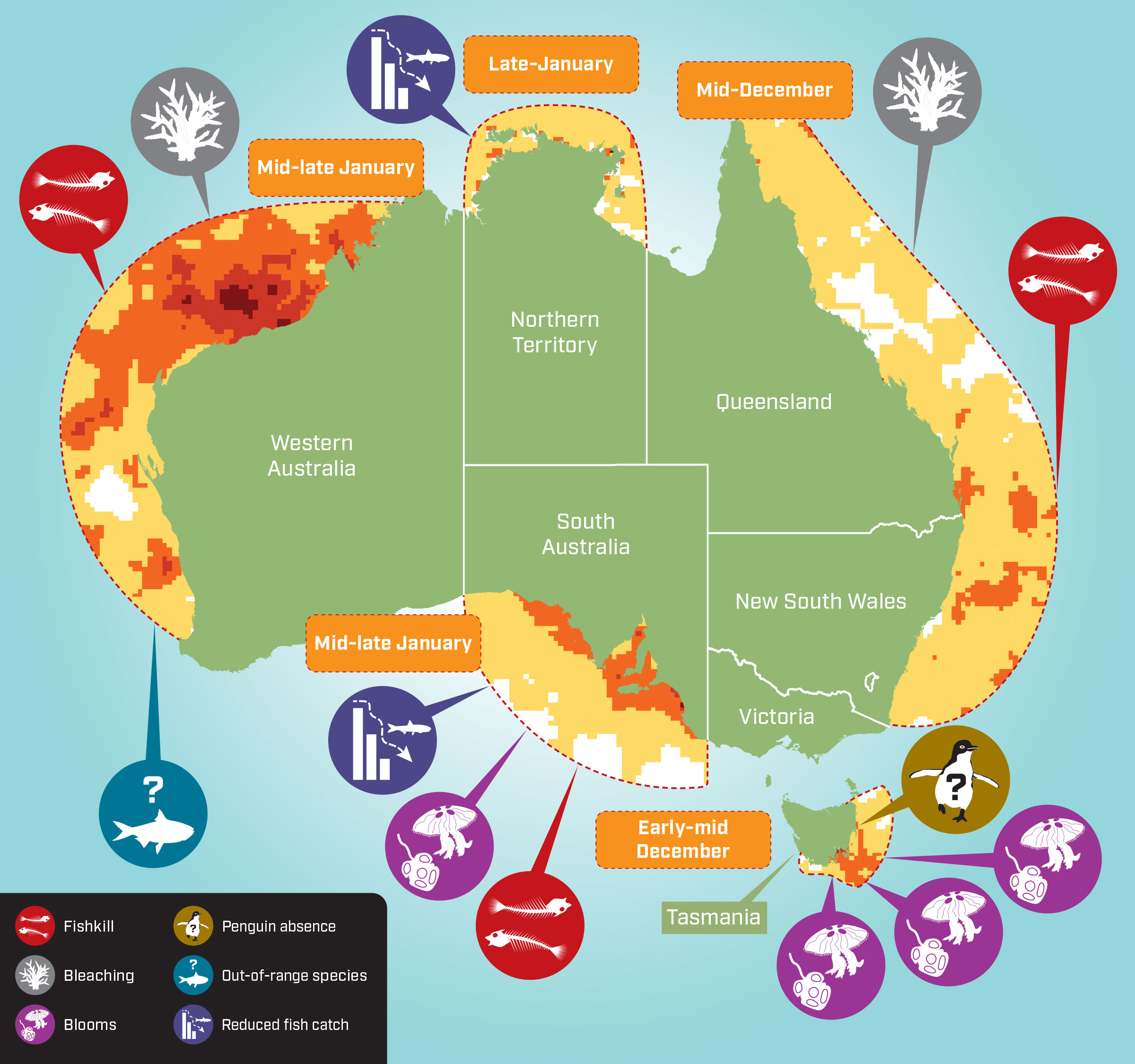
FIGURE 2. Reported biological impacts around the Australian coast for summer and autumn 2024/25 as discussed in the text. The orange boxes indicate the approximate dates during which marine heatwave (MHW) conditions intensified in each region and impacts were first reported. Corresponding MHW categories are indicated (yellow = moderate, orange = strong, red = severe, dark red = extreme; defined in Hobday et al., 2018) for the dates shown for each coastal region.
> High res figure
|
Western Australia
A large MHW was already present off the coast of northwest Australia in September 2024. Forecasts delivered as part of the national briefings in November 2024 and in subsequent months predicted this event would continue until at least February 2025. In January 2025, a fish kill of an estimated 30,000 individuals from a wide range of species was reported in the Pilbara region (Mills, 2025), and the link to the MHW was made clear in associated commentary (Pinter et al., 2025). The WA government encouraged reporting of such mortality events (Government of Western Australia, 2023) and stated that “it is possible that prolonged thermal stress due to the ocean conditions is associated with the fish kill” (Government of Western Australia, 2025). Extreme air temperatures over land during the same period, combined with a tropical cyclone (TC Sean), resulted in low survival rates of turtle hatchlings in the Pilbara, as rain and larger tides led to nests being inundated (Murphy and Gudgeon, 2025), generating further public concern. MHW conditions were classified as severe by February 2025 (Figure 3a), and widespread coral bleaching was reported on the World Heritage-listed Ningaloo Reef (Lu, 2025) and other reefs in the area, including Ashmore Reef (de Kruijff, 2025). New analysis from Climate Central (2025) showed that ocean temperatures during the WA MHW event were at least 20 times more likely to occur due to climate change. Coral bleaching continued to affect reefs in northwest WA through to May 2025. By early May 2025, over 70% of both juvenile (<10 cm) and adult corals at northern Ningaloo exhibited bleaching at depths of up to 20 m. Approximately 50% of these corals had already died, leading to record low live coral cover in the region (Figure 4). In-water and aerial surveys were conducted in May by the Australian Institute of Marine Science, and the Government of Western Australia Department of Biodiversity, Conservation, and Attractions confirmed that MHW impacts continued along the Kimberley, Pilbara, and Gascoyne coasts into early autumn, affecting more than 1,600 km of coastline.
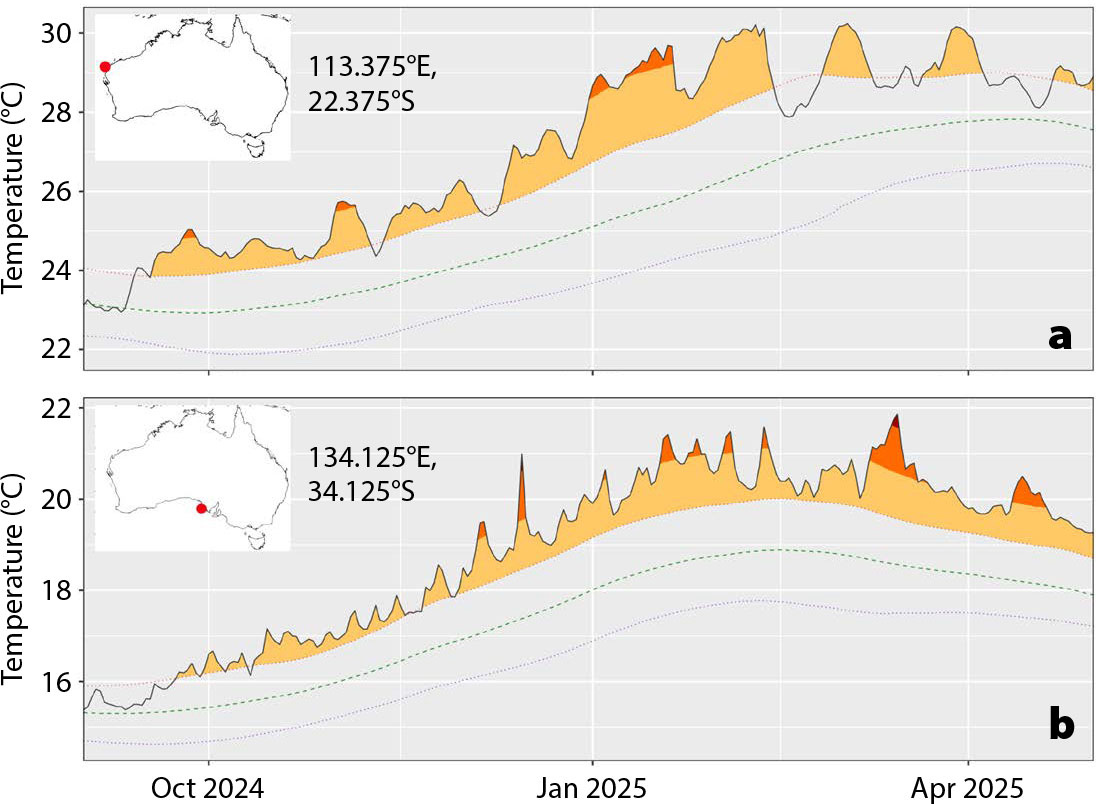
FIGURE 3. Daily observed satellite sea surface temperature (SST; black line) (a) near Ningaloo Reef (location 113.375°E, 22.275°S) and (b) in South Australia (location 134.125°E, 34.125°S) for September 1, 2024, to May 1, 2025. Marine heatwave severity is shaded where SST values exceed the 90th percentile (red dotted line) according to categories depicted in Figure 1. Green dotted lines plot daily long-term sea surface temperature climatology and purple dotted lines the 10th percentile. Images from https://www.marineheatwaves.org/tracker.html
> High res figure
|
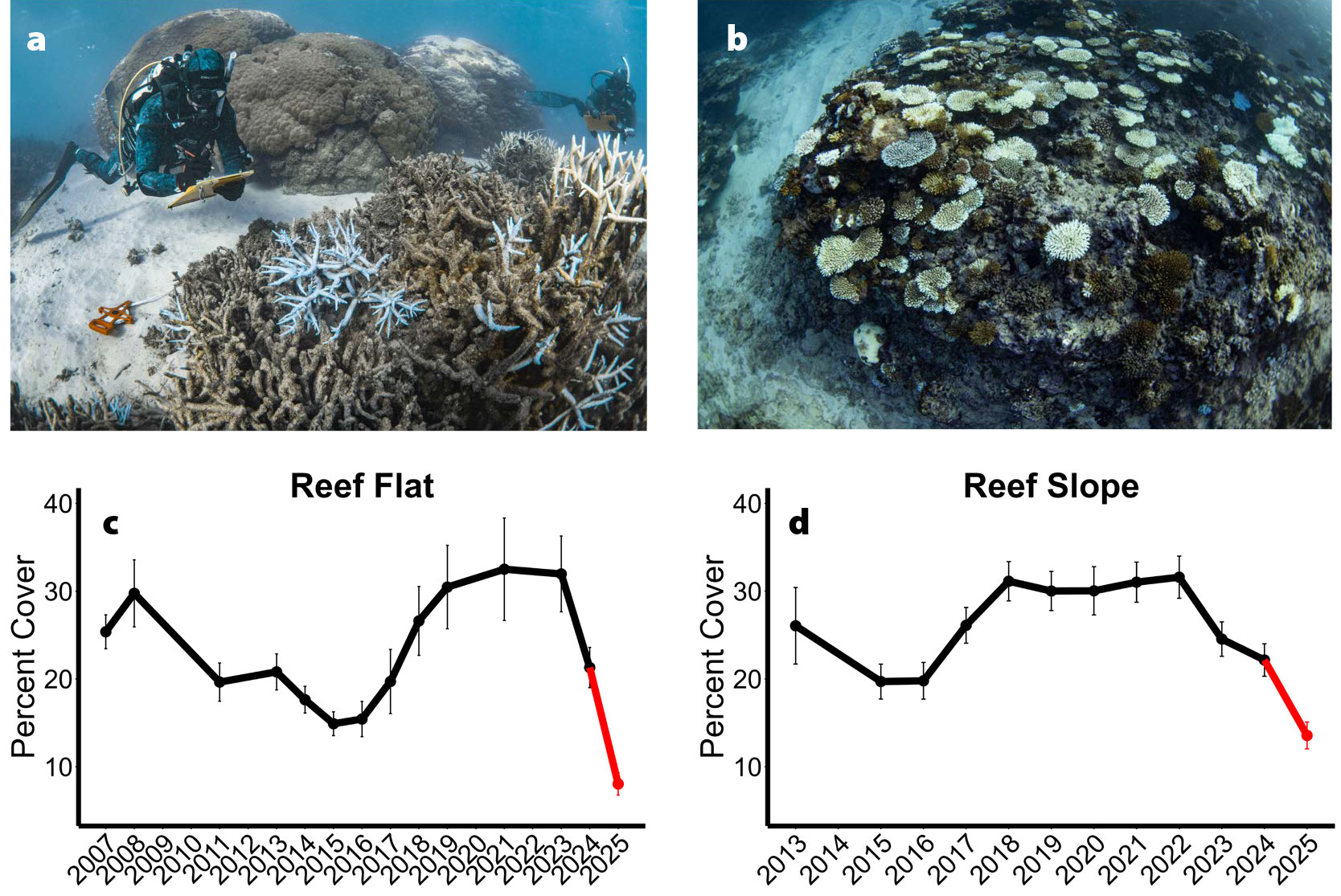
FIGURE 4. Bleached adult and juvenile corals on the (a) reef flat and (b) reef slope at northern Ningaloo Reef in May 2025. Percent cover of live coral (mean ± se) on the (c) reef flat (0–3 m) and (d) reef slope (6–15 m) at Northern Ningaloo between 2007 and 2025. Hard coral cover fell to its lowest level since monitoring by the Commonwealth Scientific and Industrial Research Organization (CSIRO) began in 2007, with an estimated coral mortality of 50% over the previous three months following the marine heatwave. Image credit for (a) and (b): BlueMediaExmouth
> High res figure
|
The 2025 WA MHW exceeded the severity of the 2010/11 event in northwest Australia, raising concerns that further ecological and fisheries impacts may still occur. The 2010/11 MHW caused widespread loss of key habitat-forming species such as seagrasses, kelps, and corals (Moore et al., 2012; Wernberg et al., 2012). In combination with extreme flooding, the MHW triggered the collapse of scallop and blue swimmer crab fisheries in Shark Bay (26°S; Chandrapavan et al., 2019) and led to long-term declines in recruitment of key commercial and recreational fishes (Caputi et al., 2016).
Ongoing monitoring of ocean temperatures by the Government of Western Australia Department of Primary Industries and Regional Development (DPIRD) raised concern over the increasing ocean temperatures across the North West Shelf region from September 2024. In line with protocols in its draft MHW Response Plan, DPIRD formed a response team, and once the MHW event reached the severe category, the team informed the WA Minister for Fisheries and communicated the evolving MHW conditions through formal MHW status updates. Targeted groups included fishing industry bodies, fishers (recreational and commercial), regional stakeholder groups, state government departments, local governments, academic institutes, and the public. The response also included direct outreach from fisheries scientists, managers, and regional compliance staff to commercial and recreational fishers to raise awareness of water observations and collate anecdotal information on impacts. The distribution of regular communications and direct outreach has increased MHW awareness among WA fisheries scientists. A stakeholder workshop involving state and national agencies took place in early August 2025 in WA to share information and assess potential impacts.
Tasmania
In late November 2024, localized MHWs were observed in southeast Tasmania (Figure 1). A series of bloom events followed, first of salps, which washed ashore in large numbers, and attracted considerable media attention (Kloser, 2025). Then a spectacular bloom of the bioluminescent algae Noctiluca scintillans occurred (McKay, 2024). Finally, in late January 2025, the moon jellyfish (Aurelia aurita) appeared in large numbers in the port of Hobart and along the southeast Tasmanian coast more generally (Wallen, 2025). The media narrative was focused on “waters out of balance,” with the warming ocean trend and occurrence of MHWs noted as contributing factors. The public interest in MHWs was further advanced by reports of reduced return of breeding little penguins (Eudyptula minor) and starving chicks on Tasmania’s east coast during January 2025 (Rojahn, 2025). Warmer waters were also associated with an outbreak of a salmon bacterial disease (rickettsia) that lead to mass mortality of farmed Atlantic salmon in southern Tasmania (Holmes, 2025). Collectively, these impacts demonstrated how warmer waters can result in a range of ecosystem changes, and media attention was high. Industry, government, and researchers were aware of the MHW extent in southeast Tasmania due to the national briefings, as evidenced by their various contributions in the media. While these impacts could not be avoided, information was readily available and helped experts explain these events to the public. Recently, the state government released a marine heatwave response plan (Marine Resources, 2025) and held a series of preparation workshops ahead of the 2025/26 summer.
New South Wales
There were numerous short-term (i.e., <20 day) and small-scale, moderate-to-strong MHWs along the New South Wales (NSW) coast during the 2024/25 summer and 2025 autumn (Figure 1). These events, beginning in December 2024, primarily occurred off the NSW south coast, with one MHW linked to the mortality of thousands of threadfin leatherjacket fish (Paramonacanthus filicauda; Tugwell, 2025). During mid-March 2025, this fishkill coincided with moderate to strong MHWs that were arrested by a sudden cool-water upwelling episode (Figure 5). Water temperatures dropped across the NSW south coast by approximately 4°–6°C over 48 hours. Necropsy and histopathological analyses undertaken on individuals collected from beaches found no evidence of a primary infectious disease (unpublished data, see statements regarding this analysis in Sams, 2025). However, some analyzed fish exhibited opportunistic bacterial and parasitic infections, ulcerations, and hepatic alterations indicative of poor nutritional status. It is hypothesized that thermal shock in response to rapid temperature declines and/or starvation related to environmentally driven changes in prey availability precipitated this fishkill. The occurrence of large numbers of dead fish on beaches caused considerable community concern and generated numerous media reports, both at the time of the event and following the public communication of necropsy and histopathological analysis results (Sams, 2025). Threadfin leatherjacket is a tropical to subtropical species that is regularly transported southward in large numbers during years of strong East Australian Current activity (Bray, 2017). Such events highlight the nuanced ways that rapid environmental changes can drive biological and ecosystem impacts for range-extending or vagrant tropical species (Gervais et al., 2021).
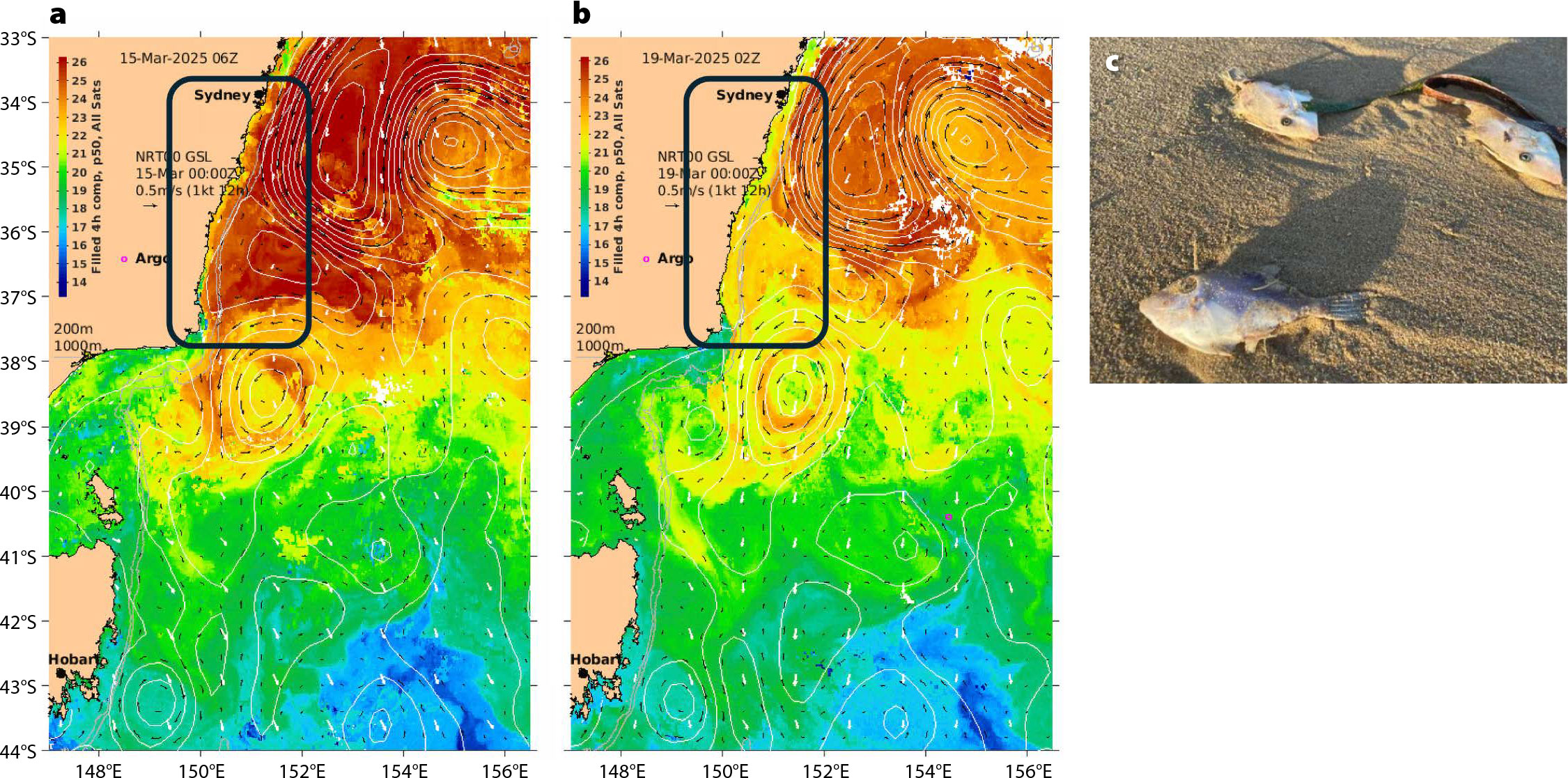
FIGURE 5. In March 2025, moderate to strong marine heatwave conditions off the south coast of New South Wales (a) were punctuated by cool water upwelling. This resulted in a rapid decline of coastal ocean temperatures (b) that was linked with the mass mortality of threadfin leatherjacket (Paramonacanthus filicauda) in this region (c). Image credit: G. Jacobs
> High res figure
|
An abalone mortality event at an NSW processing facility also occurred during the 2024/25 summer. This likely arose from either thermally stressed individuals being harvested from areas of Victoria where ocean temperatures were higher than usual or poor handling and thermal stress of live abalone onboard a vessel during transport to the facility. Both these scenarios can be avoided through awareness of the impacts of extreme thermal conditions on live abalone, leading to modifications to harvesting and processing practices. Indeed, these are recommendations in the NSW Abalone Industry MHW response plan (Coleman et al., 2025), which is anticipated for inclusion in NSW Abalone Divers Responsible Diver Package and NSW Environmental Code of Practice for the Abalone, Sea Urchin, and Turban Shell Fisheries. One lesson is that such plans and practices should be shared widely and implemented across jurisdictions to avoid similar mortality events. This is especially important as waters continue to warm and industries evolve in response to market pressures, mortality events and regulatory changes (e.g., a shift from frozen to live product requires additional practices to avoid thermal stress that could lead to unwanted mortality events post-harvest).
South Australia
The long-term warming rate for South Australia (SA) is lower than that for the east and west coasts of Australia, with SST increases of 0.2° to 0.3°C per year observed between 1991 and 2015 in shelf waters (McLeay et al., 2019). In past years, SA recorded only occasional moderate to strong MHWs. However, in October 2024, MHWs were forecasted for SA and indeed emerged in the subsequent months (Figures 1 and 3b). The first impact from these warmer conditions was reported in mid-March 2025 (Thomson, 2025). Dead marine life washed ashore amid initial reports of a dinoflagellate bloom of the toxic microalgae Karenia mikimotoi (Horn, 2025a); however, K. cristata was subsequently identified as the toxin-producing species (Murray et al., 2025). Although the microalgae are considered toxic to fish but not humans, beach users reported symptoms such as irritated eyes and nasal passages. Environment authorities reported that MHW conditions were considered a key contributing factor along with prior upwelling and riverine nutrient inputs, low winds, and limited water mixing and exchange that allowed the algae to flourish. This is consistent with other occurrences of large-scale Karenia species blooms following MHW events in Pacific coastal waters off Hokkaido, Japan (Kuroda et al., 2021; Takagi et al., 2022). A wide range of species continued to wash up on popular beaches in April (ABC News, 2025; Horn, 2025b) and May 2025, including large sharks, rays, seahorses, and cephalopods. The algal bloom covered a large area by May 2025, and warnings were issued from health and fisheries agencies. Reports of little penguin mortality near Victor Harbor in May 2025 were also linked to the algal bloom, but this has not yet been confirmed (Pedler and Bailey, 2025). Likewise, the cause of mass mortality of intertidal cockles (pipi) in April in Goolwa is not clear, although warmer ocean temperatures and the algal bloom were again implicated. Subsequent closures of three regional oyster harvesting areas occurred in May 2025 due to the detection of neurotoxic brevotoxins, likely produced by Karenia spp. (Cen et al., 2024). The closures were precautionary as the levels of brevetoxins were below the threshold of concern for public health (Government of South Australia, 2025; Yankovich and Graham, 2025). Extensive media interest in this event has advanced public awareness, with significant research funding and effort expended to predict the spread of the bloom in real time using satellite chlorophyll a imagery and short-term ocean circulation model forecasts to provide regular situational updates. These updates have provided the ocean-dependent industries and concerned public with information to inform future operational and recreational activities.
Queensland and Northern Territory
The Great Barrier Reef (GBR) has been subjected to multiple bleaching events over the past decade (e.g., Hughes et al., 2021; Cantin et al., 2024; Byrne et al., 2025). During summer 2024/25, MHWs in the northern GBR led to bleaching over more than 1,000 km of the reef (GBRMPA, 2025), the sixth mass bleaching event on the reef since 2016. Aerial surveys indicated widespread impacts in the reef shallows across the far northern GBR, with 41% of the 162 inshore and mid-shelf reefs surveyed showing medium to high bleaching (AIMS, 2025). While reefs in the Torres Strait are generally less susceptible to bleaching due to regular upwelling events and strong tidal flows that allow cooling of the water column (Sun et al., 2024), as of May 2025, 21.7% of 23 reefs surveyed showed signs of medium or higher bleaching (AIMS, 2025). In March 2025, MHWs across the wider Coral Sea were ameliorated due to the severe TC Alfred. No cyclones crossed the GBR this summer, although TC Alfred did provide a cooling effect via strong winds and cloud cover on the southern region of the reef. The full extent of coral bleaching in the 2024/25 summer is currently under assessment, a process that will continue over the coming months (GBRMPA, 2025).
In terms of response to MHWs, the GBR Marine Park Authority has a range of ongoing management programs, with a combination of preventative and restorative actions to support coral reef resilience and recovery. These build on foundational management programs, such as the zoning plan and field management, using the best available information and forecasting tools (e.g., Spillman and Smith, 2021) to adjust management actions to improve reef health and recovery. Further west into the Gulf of Carpentaria shared with the Northern Territory, warm conditions in January (Figure 1) and the delayed onset of the 2024/25 monsoon wet season may have contributed to one of the worst banana prawn fishing seasons in this region (NPRAG, 2025). In contrast, fishers reported that some species such as gold-band snapper (Pristipomoides multidens) appeared to benefit from these conditions, resulting in record catches (CSIRO, 2025).
Warning, Preparation, and Response Across Timescales
In the summer of 2024/25, MHWs around Australia were associated with major disruption to marine ecosystems and dependent businesses. Coral bleaching on both the east and west coasts and the algal bloom in SA are likely to have long-term impacts (e.g., reduced reproductive output of commercial species) and will be subject to ongoing investigation. Additional economic and social ramifications based on the connections between environmental extremes, ecosystem services, and human well-being are likely (Hartog et al., 2023). Overall, the considerable media interest and public concern regarding changes in Australia’s oceans influenced recent state and federal government funding announcements in SA, in particular. The impact of these MHWs, particularly fish kills in populated areas, brought community and industry demands for action that were recently met with government and industry funding to make national MHW forecasts operational and publicly available(DCCEEW, 2025). These forecasts became publicly available through the Australian Bureau of Meteorology in December 2025.
As noted, over the past two summers, information on ocean conditions and forecasts was shared in national briefings (Hobday et al., 2024). There has been subsequent use of these forecasts in regional briefings, in industry information sessions, and in early warning steps outlined in response plans (Champion and Coleman, 2024; Marine Resources, 2025). In response to these forecasts, industry-based data collection was initiated in some regions, ministerial briefings were conducted, and ocean gliders were deployed to collect data in real time as events evolved (e.g., Benthuysen et al., 2025). Despite these briefings, some sectors and decision-makers were not well prepared for the emergence of MHWs and their ecological impacts this past summer. Pershing et al. (2018) observed that prior exposure to MHWs led to adaptations along various world coastlines; while Australian regions that were impacted in 2023/24 were well prepared with response plans for 2024/25 (e.g., NSW; Champion and Coleman, 2024), others that had not yet experienced recent heatwaves (e.g., SA) did not have comprehensive plans in place. As a result of previous coordination among marine researchers and managers (e.g., Hobday et al., 2024), jurisdictions with a recent MHW history shared lessons and expertise with SA, and existing and/or new advisory groups provided advice to support management and investment decisions related to monitoring and recovery.
As most regions of Australia have now experienced MHWs in the past two years, awareness is at an all-time high. It is important to convert these experiences and lessons into effective strategic plans to address the short-term risk of extreme events (e.g., next summer) and the longer-term risk of ocean warming (Hobday et al., 2018). Proactive actions are possible with forecasts, with forecast lead time determining the preparation window for individual MHWs (Spillman et al., 2021). Examples of proactive actions in areas where MHWs are forecasted include early harvest, disease prevention, and changing location (aquaculture); marketing opportunities for new species (recreational fisheries); increased pest management and species rescue (conservation); and changing ports and improving fish handling (commercial fisheries) (Hobday et al., 2024). Additionally, a wide range of actions can be implemented to help communities and businesses reduce the impact of these extreme events and build adaptive capacity over short and long terms (Figure 6).
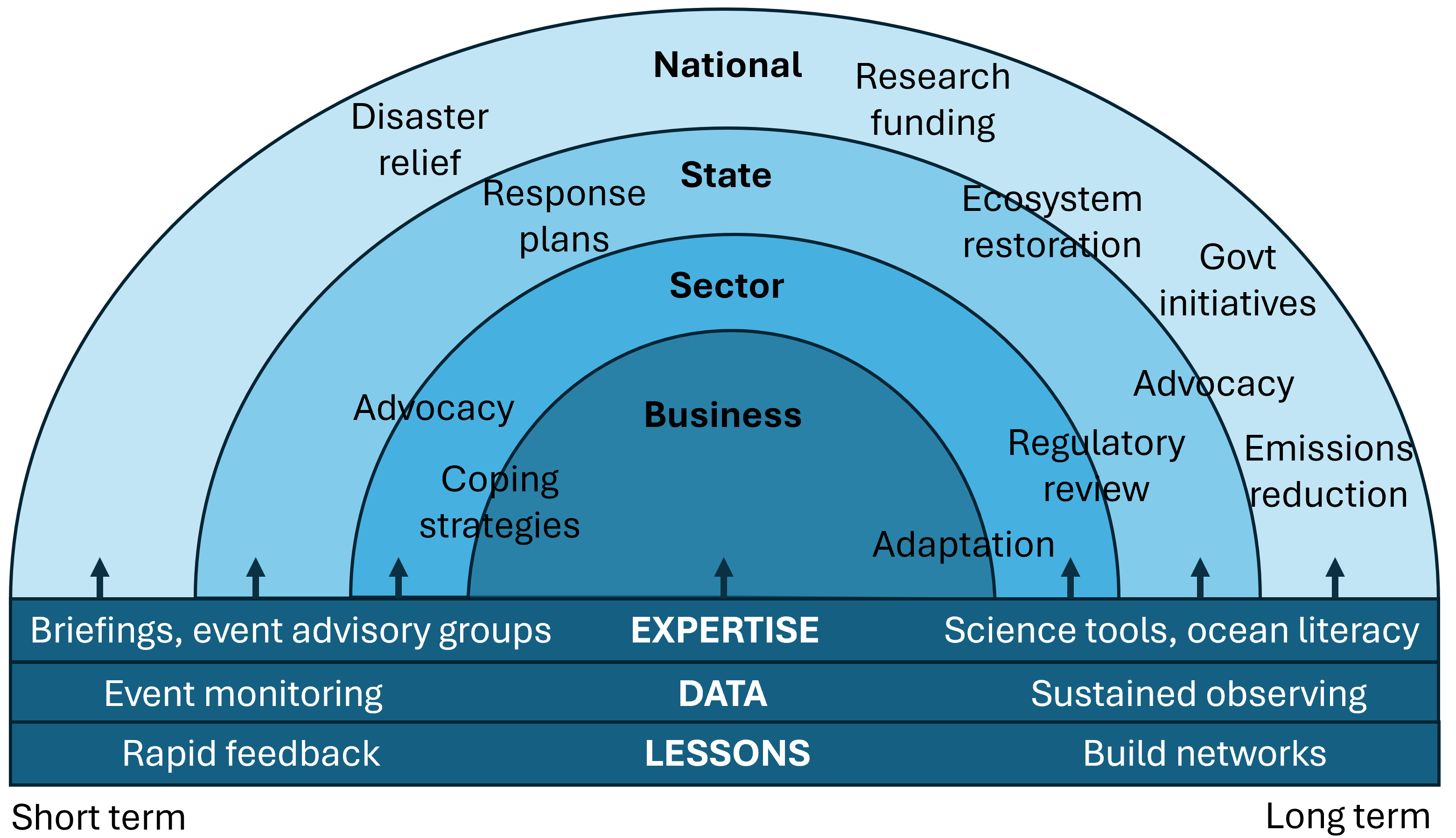
FIGURE 6. Actions in response to the risk of extreme events at short and long timescales. Across all scales, sharing of expertise, data, and lessons is critical to enable responses, although the focus varies between short and long term. Primary responsibility for actions can be at business, sector, state, or national levels.
> High res figure
|
Three underpinning enablers for improving responses to extreme events such as marine heatwaves are the sharing of lessons, expertise, and data (Figure 6). For example, reminding stakeholders of recent events and impacts based on historical case studies (e.g., Eveson et al., 2015) is important during the preparation window to raise industry awareness and increase understanding. This includes sharing responses that have been positive (e.g., temporary removal of handfish from the wild in Tasmania; Hobday et al., 2024). At short timescales when events are underway, sharing past lessons in multi-agency forums and involving critical decision-makers in discussions will raise awareness and enable rapid responses. Advocacy for improved response options is a focus for businesses and sectors. At longer timescales (years), it is advisable to initiate advocacy efforts at national scales to improve preparedness and establish networks that will increase community and industry engagement and establish trusted communication pathways that will advance cooperation during MHWs (e.g., Stevens et al., 2022). In national and regional briefings, additional information can be presented to increase expertise (Hobday et al., 2024). Encouraging two-way exchange of knowledge and observations is important. For example, during briefings and related meetings, industry, stakeholders, and Indigenous representatives often share anomalous observations that can provide additional early warning of impacts. At longer timescales, synthesis reporting and sustained observing systems (e.g., Lynch et al., 2014) provide necessary data and insight for response planning.
With these enablers in place, a range of short- and long-term response actions can be initiated (Figure 6). Sector or regional response plans based on shared experience and lessons can be prepared (e.g., Champion and Coleman, 2024; DPIRD, 2025). Where such plans exist, actions that can be rapidly implemented include information dissemination, short-term data collection, and provision of economic relief. In remote areas where impacts may be less visible (e.g., offshore coral reefs) and/or where access for monitoring and baseline studies is difficult and expensive, the forecast preparation window must be used to determine levels of resourcing and plans needed for deployment of people and sampling technologies. There can be advocacy for assistance for short-term climate shocks, including changes in policy or waiving of license fees to offset lost income. Longer-term efforts to prepare for future events include development of scientific tools such as dispersal models, downscaled forecasts for coastal zones, and economic solutions such as formation of insurance pools (e.g., Hobday et al., 2025). Sectors can advocate nationally for opportunities to increase their resilience to extreme events, such as with government initiatives that provide investment for adaptation. At-risk sectors can also make long-term plans to increase their agility (responsiveness) (sensu Hartog et al., 2023) when confronted with extreme events, including by influencing the regulatory conditions, manipulating production systems, developing markets for alternative products, educating decision-makers, and investing in new technology when profits allow.
The Future is Already Here in Extreme Events
Extreme marine events are increasing in frequency, intensity, and duration, and the impacts around Australia during the past two summers show that the future will likely be difficult for climate-exposed industries and communities. Regions that may avoid MHW-related impacts in some years will likely be affected in others. The sharing of information, data, lessons, and expertise, together with the combination of short- and long-term preparation, can reduce risks. Long-term plans and adaptation are critical to ensure that valuable marine industries and ecosystems persist through a changing climate. Extreme events that have already occurred provide a window into the future—while it might be possible to cope with some changes in the short term, the most viable long-term solution for continued sustainable ocean use is reducing emissions globally.
Acknowledgments
We thank the FRDC for hosting the National Marine Climate briefing series in 2023/24 and 2024/25, and FRDC extension officers for the ongoing dissemination and collation of MHW information. Additional information on reporting impacts was provided by Gary Jackson (DPIRD). Figure 2 was prepared by Louise Bell. We appreciate the critiques by Elise Chandler, Andy Taylor, Dyan Gomes, and two anonymous reviewers, who all improved the paper.


 PDF
PDF