

 PDF
PDFFull Text
 |
Tammy Silva, Research Marine Ecologist, Stellwagen Bank National Marine Sanctuary, Office of National Marine Sanctuaries, National Oceanic and Atmospheric Administration, Scituate, MA, USA
Degree: When, where, what, and in what field?
I earned my PhD at the School of Marine Science and Technology (SMAST), University of Massachusetts Dartmouth, and also worked as a guest student at the Woods Hole Oceanographic Institution. A NOAA Nancy Foster Scholarship (perhaps the best graduate fellowship available, in my opinion), funded my PhD, which I finished in 2018. My dissertation focused on using opportunistic datasets, passive acoustic monitoring, and acoustic and motion sensing tags to study habitat use and bioacoustics of toothed whale species. I focused mostly on toothed whales in Stellwagen Bank National Marine Sanctuary and Massachusetts Bay, but a couple of my thesis chapters used existing data from dolphins in Hawaiian waters.
Did you stay in academia at all, and if so, for how long?
For my postdoc, I worked jointly with Stellwagen Bank National Marine Sanctuary and SMAST, so I was partially in academia for about 2.5 years. It was a great experience to have some of the freedoms and benefits of academia (research topics, department seminars, etc.) while also being involved in conservation, management, and policy at the sanctuary.
How did you go about searching for a job outside of the university setting?
I’ve been very lucky that most of my jobs have found me, but they would have never happened if I hadn’t worked to develop connections and take advantage of opportunities. Just as I was finishing my PhD, postdoc funding became available at the sanctuary. I was doing my Nancy Foster Scholar Program Collaboration in the office at the time and offered to give a presentation on some of my habitat modeling results. After my presentation, I was offered the postdoc position based on my skills. Three years later I was offered a contract position that turned into a federal job. Developing connections and strong working relationships with the research team at Stellwagen and being willing to share my work with the staff during my PhD led to my job. I think those strategies (networking and taking advantage of opportunities) are essential during job searching.
Is this the only job (post-academia) that you’ve had? If not, what else did you do?
Yes, I’ve been at NOAA’s Stellwagen Bank National Marine Sanctuary for four years, first as a contractor and now as a federal employee.
What is your current job? What path did you take to get there?
My current title is Research Marine Scientist, and most of my time is spent doing fieldwork and data analysis. I also have the opportunity to work on outreach projects and resource protection and to provide input on sanctuary management. During my time as a Nancy Foster Scholar at Stellwagen, I got to know sanctuary staff, spent time in the office, and volunteered with their research team. I took advantage of opportunities to showcase my skills and value to the sanctuary and eventually was offered a postdoc, a contractor position, and then a federal job.
What did your oceanographic education (or academic career) give you that is useful in your current job?
I use my oceanographic education constantly in my current job. I studied the sanctuary for my PhD and became intimately familiar with the local and regional oceanography through my research and course work. Whether it’s conducting our own research or contributing to collaborators’ work, evaluating outside research projects or providing input on activities happening in the sanctuary, my oceanographic background is incredibly useful.
Is there any course or other training you would have liked to have had as part of your graduate education to meet the demands of the job market?
National Marine Sanctuaries encompass both extraordinary biodiversity and intense human use, which can generate conflicts among wildlife and stakeholders. Involving stakeholders in our processes, learning from them, and working together to address conservation issues is the only path to true solutions. Acquiring these skills on the job has been interesting and fun, but it would have been helpful to have had an introduction to stakeholder engagement in conservation and management. Also, I wish I said yes to more fieldwork opportunities in graduate school. Experience at sea conducting different types of research, using a variety of equipment, and learning to work collaboratively with many different types of folks in sometimes stressful, high-stakes situations is good life training.
Is the job satisfying? What aspects of the job do you like best/least?
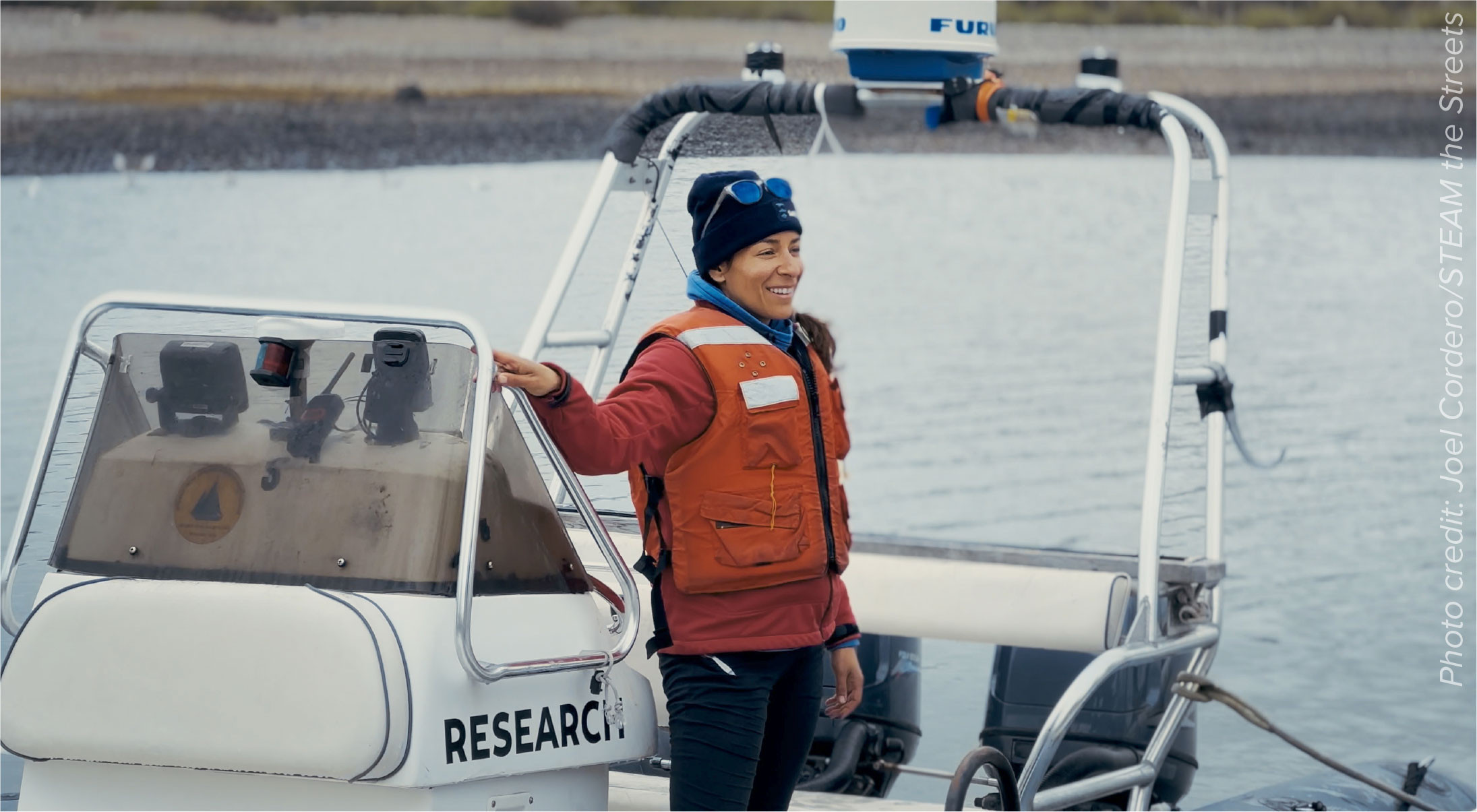
I love my job. I love that every day is different. One day I might be analyzing tag data from humpback whales, the next day providing input on a sanctuary video game, and the following day working on forage fish management. I also love my team, how much fun we have, and how productive we are together. Working with great people is key. I also love getting out on the water for fieldwork. There’s no better office than the ocean!
Do you have any recommendations for new grads looking for jobs?
Talk to people! Network as much as you can. You never know when someone you meet might lead to an opportunity. Get to know enough people, and the right people, in your field so that when a job comes up, you’re the first person someone thinks about before the job is even advertised.