
 PDF
PDFFull Text
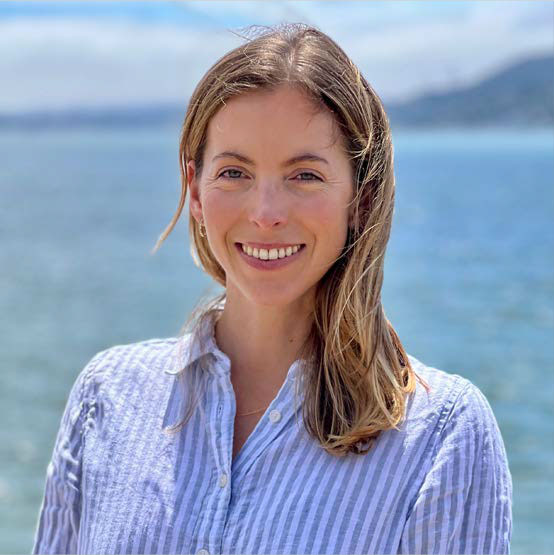 |
Lauren Linsmayer
Degree: When, where, what, and what in?
Following completion of BS and MS degrees in interdisciplinary Earth systems at Stanford University in 2011/2012, I earned an MS in oceanography and a PhD in marine biology at the Scripps Institution of Oceanography, University of California San Diego, in 2018. My research employed biomolecular tools including oxygen microelectrodes, proteomics, and metabolomics to examine energy-producing pathways in corals under varying environmental conditions.
Did you stay in academia at all, and if so, for how long?
No, I went directly to policy. My master’s work at Stanford included an internship in Washington, DC, at NOAA headquarters, where I saw the need for more scientists working in policy settings, and this set my path for the next decade. While finishing my PhD, I was selected for the Knauss Fellowship, which I’d first learned about during my DC internship and had become my desired next step after academia. After defending my dissertation (and a celebratory dive trip to Indonesia), I moved to DC to start the fellowship in 2018.
How did you go about searching for a job outside of the university setting?
The most useful part of the search process was talking to other ocean professionals and recent graduates of my program about what they were doing and how they got there. I reached out to program alumni and people I’d met at conferences and asked for 20- to 30-minute informational interviews. I’ve always had a diverse set of interests spanning ocean science, policy, and conservation, which created almost too many post-graduate paths to choose from. I knew generally that I wanted to apply my science background to inform conservation or policy actions and that a fellowship or internship would be a helpful entry point into a new sector from academia.
Is this the only job (post-academia) that you’ve had? If not, what else did you do?
I’m now almost 10 years post-PhD and have held a range of roles. During my Knauss Fellowship, I worked on NOAA issues in Congress with the Senate Committee on Commerce, Science, and Transportation. Bitten by the policy bug, I was fortunate to stay on the Hill as a professional staff member for the House Science, Space, and Technology Committee from 2019 to 2021. I continued to work on NOAA weather, ocean, and climate science issues and deepened my understanding of the legislative process through a change in administration, COVID, and major policy packages that included the Inflation Reduction Act.
Desiring a return to the ocean world, I joined the team at the nonprofit Urban Ocean Lab, where I got to apply my federal policy experience to thinking about how to scale equitable climate policies at the level of coastal cities.
Later, I chose to return to California, where my ocean career began, and my network was essential. A colleague and friend introduced me to my future supervisor at the California Ocean Science Trust (OST), and I applied (and was hired) shortly after that informational interview. At OST, whose mission is bridging science and policy for California ocean and coastal decision-making, I served as a Senior Science Officer for three years, leading projects on timely California ocean and coastal issues in collaboration with academic, nonprofit, private sector, and government experts.
What is your current job? What path did you take to get there?
Currently, I’m focusing on understanding the kind of mother I want to be and the type of life I want to build for my son. Conversations with other parents, along with Neha Ruch’s book The Power Pause, have shaped how I think about this season as a deliberate pause that will inform the perspective and priorities I bring back to ocean work.
At the same time, I’m pursuing a long-standing interest in helping heart-led ocean leaders create more collaborative, holistic solutions, integrating my science policy background with training I received as a regenerative somatic facilitator. Working across sectors, I’ve seen how cultivating trust and genuine relationships, not just presenting the best data, fosters a shared commitment to act. Somatics offers a way for leaders to stay grounded in critical moments, which often determines whether people form the trust needed to act on shared evidence. I’m exploring these ideas through a community I’m building called Ocean Soulutions (join us on Instagram: @ocean_soulutions), and I’m committed to finding my next role at this intersection of sound science and collaborative, heart-centered ocean action.
What did your oceanographic education (or academic career) give you that is useful in your current job?
The combination of interdisciplinary breadth and depth of rigorous PhD research has provided me with complementary skillsets that I’ve used throughout my science policy career. Although I’ve used my PhD expertise (coral physiology) in policy settings on rare occasions, I’ve consistently drawn on the breadth of my oceanographic and marine biology background. A foundational understanding of ocean carbonate chemistry, for instance, has helped me grasp various marine carbon dioxide removal (mCDR) approaches and translate what startups are developing to inform decision-makers who are weighing the societal and policy implications. Understanding the interconnected ocean-climate system has helped me ensure that the ocean is included when drafting federal climate policy. Knowledge of marine ecology has informed policy memos I’ve penned on regenerative ocean farming that consider the potential benefits and not just the risks of seaweed and shellfish farming to coastal ecosystems.
Is there any course or other training you would have liked to have had as part of your graduate education to meet the demands of the job market?
Overall, my graduate training anchored in science with some interdisciplinary exposure to policy prepared me well. In retrospect, additional training in project management, public speaking, facilitation, and policy negotiation would have been additive. I use these constantly, whether managing multiple project timelines, convening a cross-sectoral workshop on a California coastal issue, negotiating bipartisan bill language, or opening a conference session. That said, I’ve been able to develop these skills on the job and by learning from colleagues.
Is the job satisfying? What aspects of the job do you like best/least?
The most satisfying aspects of science policy work have been relationship- and impact-oriented ones. The work runs on relationships as much as evidence, and I love building strategic partnerships and working on quickly evolving topics that require creative, nuanced conversations. I feel energized and satisfied when months of planning, Zoom calls, and emails culminate in a productive convening that brings together scientists, policymakers, and innovators and leads to new collaborations, ideas, or funding opportunities. That’s when the work of bridging science and policy really comes to life.
The flip side of the same boundary-spanning work is that it can leave you caught in the middle of conflicting timelines, goals, and incentives of different sectors, for example, aligning a state agency’s regulatory requirements with a new industry’s not-yet-fully-understood environmental impacts and academic science’s baseline observational data. That mismatch means progress often starts with identifying where the gaps are and working toward filling them before designing new policies or solutions.
Do you have any recommendations for new grads looking for jobs?
I know you might think that your first job will determine your career path, and I understand the instinct to want to do something that directly uses your training. I want to reassure you that you don’t need your full path mapped out before graduating, and your first job won’t limit your future options. Think of it as a steppingstone. You are collecting skills, experiences, knowledge, and relationships that you’ll carry forward. The single most useful thing I did was reach out for short informational interviews with people on career paths that interested me. Those conversations shaped my direction, and the relationships I’ve invested in over time have become symbiotic. I’m currently developing career resources through Ocean Soulutions that integrate practical tools with somatic reflections. Wherever you are on your own path, I’d love to hear from you. Reach out on Instagram or by email.