
 PDF
PDFFull Text
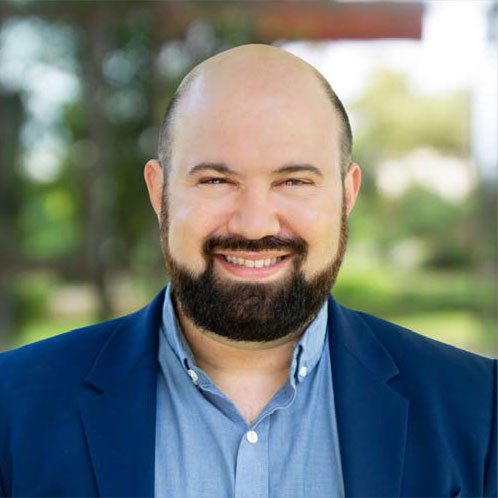 |
Alec Bogdanoff, Chief Executive Officer & Co-Founder, Brizaga
Degree
I earned my PhD in physical oceanography from the MIT-Woods Hole Oceanographic Institution Joint Program. Before that, I completed both bachelor’s and master’s degrees in meteorology at Florida State University. During my PhD work, I was also deeply involved in science communication and science policy. These opportunities went well beyond my coursework and dissertation research, and really shaped the direction of my career.
Did you stay in academia at all, and if so, for how long?
I never went into academia directly. As soon as I finished my PhD, I moved into the science policy world and shortly after started my own business. That said, I’ve never really left academia either. Throughout my career I’ve stayed connected as an adjunct instructor and in affiliate faculty positions, and I have taken other opportunities to engage with universities. Here in South Florida, that’s meant working with researchers and faculty at Florida Atlantic University, Florida International University, Nova Southeastern University, and the University of Miami.
How did you go about searching for a job outside of the university setting?
My path was a little unconventional. I received a Sea Grant John A. Knauss Marine Policy Fellowship and spent a year working on Capitol Hill for a US Senator. At the end of the fellowship, I had the opportunity to move back home to Florida for family reasons. I briefly worked for a startup I found through LinkedIn, but it didn’t take long to realize that I wanted to build something of my own.
In 2017, just a year after finishing my PhD, I co-founded Brizaga with my business partner, who is a professional engineer and certified floodplain manager. The research skills I developed during my doctorate were invaluable from day one. But honestly, what really set us apart as a team was the combination of deep technical expertise with science policy and science communication skills. That blend isn’t common in the engineering and consulting world, and it allowed us to quickly establish Brizaga1 as the go-to company for resilience and flood protection in South Florida.
1 Brizaga blends the names of our founders’ nieces and nephews—a constant reminder that the decisions we make today will define their tomorrow.
Is this the only job (post-academia) that you’ve had? If not, what else did you do?
Not at all. I’ve worn a lot of hats. In addition to the Knauss Fellowship and the startup, I served as the Florida Director for a national nonprofit, the American Flood Coalition, where I worked to advance flood policy and resilience at the local, state, and federal levels.
And even within Brizaga, no two days look the same. At any given time, I might be doing technical analysis, advising a municipality on policy, presenting to a corporate board, or working with homeowners trying to understand their flood risk. That’s one of the things I love most about what I do—it’s many jobs wrapped into one career. The breadth of my academic training is a big reason I’ve been able to move fluidly across all those roles.
What is your current job? What path did you take to get there?
I’m the CEO and co-founder of Brizaga, a strategic civil and coastal engineering firm that my business partner and I designed to help people. Whether that’s an individual homeowner, a major corporation, or an entire community, we help navigate the very real and growing threats of climate change and flooding. We don’t just solve today’s problems—we think strategically about long-term resilience: the viability of assets, the futures of communities, and ultimately the people who live and work in them. It’s technical work, but at its core it’s about making sure people and places can survive and thrive in a rapidly changing world.
What did your oceanographic education (or academic career) give you that is useful in your current job?
First and foremost, it gave me the critical thinking skills to dive deeply into complex problems and see them from angles others often can’t. My technical grounding in the science also allows me to support both the private and public sectors in ways that are genuinely rare in this industry. But what really set me up for success was the blend of science communication and science policy training I developed during my PhD, in addition to the technical expertise.
A good example of this in practice: we took complex tidal data and sea level rise projections and translated them into real-world, actionable understanding of tidal flooding risk for local governments. That effort also directly informed state-level policy, bringing consistency to flood risk planning across the incredibly dynamic and diverse state of Florida. My business partner is a civil and coastal engineer, and together we bring engineering, science, public policy, and communication to bear on exactly these kinds of problems: the ones that don’t fit neatly into any one discipline.
Is there any course or other training you would have liked to have had as part of your graduate education to meet the demands of the job market?
I would like to have had a better understanding of alternative career paths earlier on. There’s so much you can do with an oceanography PhD that nobody really talks about in graduate school. On the technical side, more exposure to GIS would have been valuable given how central spatial analysis is to the work we do. I did receive strong training in coding, which has proven incredibly useful—and that has come full circle in a big way. With the advent of AI, those coding and logic skills are coming back with a vengeance. We’re now building AI tools across our entire company, and that foundation from my graduate training is a big reason we’re able to do that.
Additional coursework in science communication and science policy would also have been valuable, though much of that learning happened on the job. In some ways, that real-world training was irreplaceable, but having a stronger foundation coming out of grad school would have accelerated things considerably.
Is the job satisfying? What aspects of the job do you like best/least?
Incredibly satisfying—and I mean that genuinely. I love waking up every day knowing that the work we’re doing moves things forward, solves real problems, and makes the world a better place. What I enjoy most is seeing the direct impact of helping people tackle challenges that others simply aren’t equipped to address. There is something deeply rewarding about watching a community implement infrastructure that protects them for the long term, or witnessing a fundamental shift in how decision-makers think about flood risk and resilience. That kind of impact doesn’t get old.
If I’m being honest about what I enjoy least…I don’t always get to do the deep research and science that formed the foundation of my training. There’s a part of me that misses that. But that’s the reality of building and running a business, and the trade-off is more than worth it.
Do you have any recommendations for new grads looking for jobs?
My single biggest piece of advice: ask for a 15-minute coffee meeting. That’s it. It sounds simple, but it’s one of the most powerful tools in a new grad’s arsenal and almost nobody uses it intentionally.
Here’s the thing—almost anyone will give you 15 minutes, especially virtually. People want to help, especially when someone comes to them prepared, thoughtful, and respectful of their time. Use LinkedIn, use your university network, and use every connection you have. Reach out directly, ask clearly for a short meeting, show up with specific questions, and when the time is up, respect it and say thank you. That’s it.
What you’re really doing is building a professional network, one genuine conversation at a time. And those conversations compound. The oceanography and climate world is smaller than you think, and the person who gives you 15 minutes today might be your client, your collaborator, or your biggest advocate five years from now.
Don’t wait for the perfect job posting. Go have coffee.